
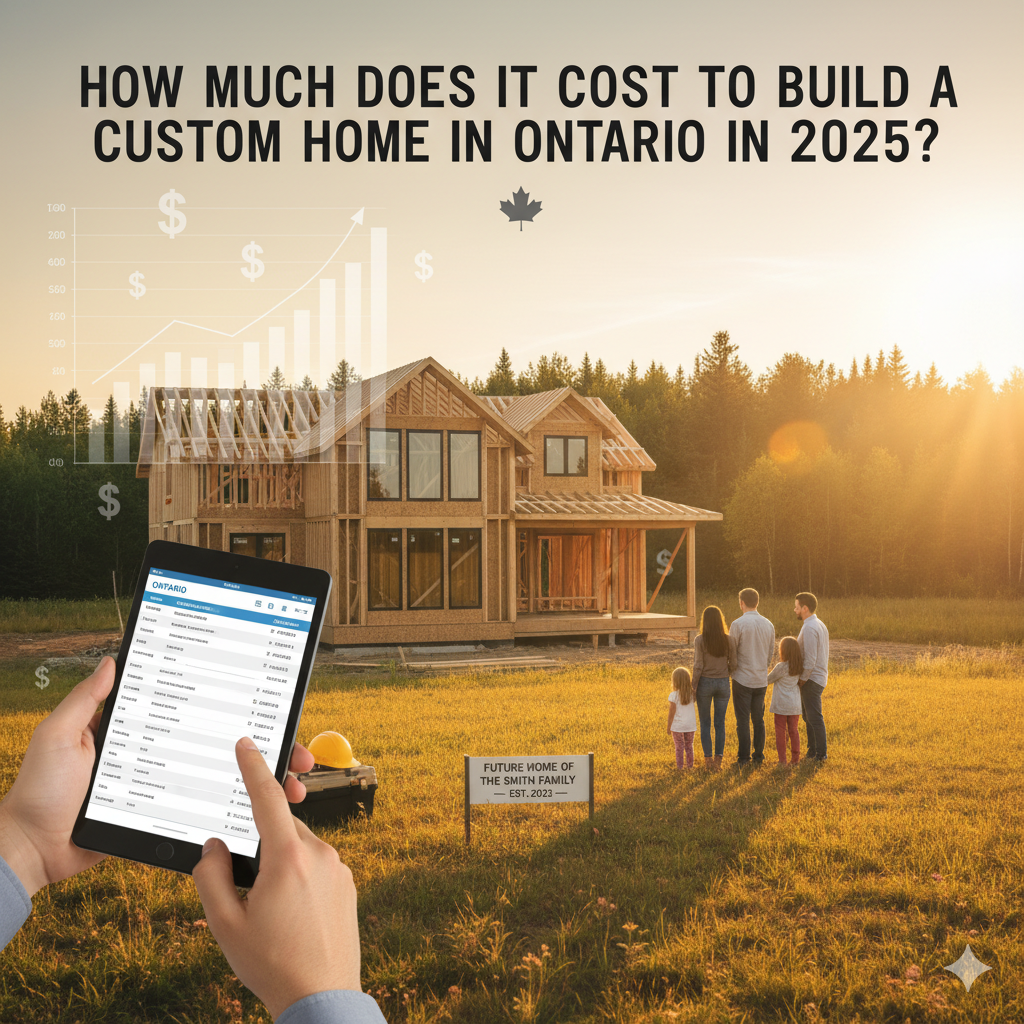
Constructing a custom house is one of the most serious investments anyone can undertake, and for anyone planning a project in Ontario, 2025 is a year of promise and pitfalls. Knowing the cost to build a custom home in Ontario in 2025 is essential if one wishes to estimate correctly, prevent unpleasant surprises, and ensure the dream house does not outstrip one’s finances.
This article summarises all the future homeowners need to know — from the square foot average price to GTA home building cost fluctuations, and from the trend of material prices to construction and labour cost estimator Ontario forecasts. By going through this, one will have a clear understanding of the costs associated with undertaking a home-building project in Ontario this year.
Why Knowing the Cost Is Essential for Planning
Anyone who is undertaking a home-building project must begin with a defined and thought-out budget. Not a ballpark figure, but knowing every step of the way — buying the land, designing it, getting it permitted, constructing it, and completing it — and what each step brings to the overall budget. Detailed cost planning facilitates accurate budgeting, good management of contingency funds, and wise decision-making in selecting finishes or upgrading features. It even allows proper financing, either through construction loans, credit lines, or mortgage acceptance, so cash is available when milestones are reached.
Homeowners, builders, and architects all benefit if expectations are set reasonably at the start. Open budgeting fosters trust among all and reduces disputes about cost overruns. It allows for better project planning because trades can be booked against known cash flow, with less waiting to get more money into the pot. Without planning, projects are delayed, incur pay penalties, or waste redesign fees to cut back midstream.
Poor budgeting is among the leading causes of unfinished constructions and ruined relationships between clients and builders. By being well informed on the construction industry, factoring in local price variations, and having a professional estimator or construction technical writer prepare minute detail documents, individuals can anticipate and effectively cut off the risk of going broke mid-project.
How the Cost to Build a Custom Home in Ontario Has Changed
Ontario construction and labour material prices have been volatile and extremely sensitive to global economic forces during the past three years. Post-pandemic and pandemic supply chain disruptions had material shortages that caused severe price spikes in everything from drywall to lumber.
Although wood prices, which reached all-time highs in 2021, have stabilised, other materials required, such as concrete, steel, roofing products, and energy-efficient appliances, still trade significantly higher than they did before the pandemic. This is preventing the overall cost of construction from fully returning to what most would call “normal.”
Inflationary pressures have also had their say, pushing not just materials costs but also funding the projects at a higher cost in terms of interest rates. Shortages of skilled tradespeople add another layer of complexity — Ontario’s red-hot housing and infrastructure markets mean that carpenters, plumbers, and electricians can all demand top dollar, which directly affects the final cost of building.
In addition, municipalities in Ontario have adopted or increased a wide range of permit fees, development levies, and compliance requirements, all contributing to the cost of a home-building project. Building codes and energy efficiency regulations, beneficial as they are in the long term, are apt to require new insulation, windows, and mechanical systems, pushing budgets even higher. Prospective home purchasers must understand, then, that prices do not stay the same; they will continue to fluctuate as markets react to the alterations in worldwide supply, domestic demand, and government policy.
Average Cost Per Square Foot
One of the most practical methods for estimating a project’s budget is by looking at the cost per square foot to build a house in Ontario. This approach gives homeowners a quick way to compare different design options and adjust floor plans to match available funds. As of 2025, industry reports and professional estimators provide the following breakdown:
Low-End Construction: CAD $155–$200 per sq ft – suitable for basic custom homes with standard materials, minimal architectural complexity, and cost-effective finishing packages.
Mid-Range Construction: CAD $200–$285 per sq ft – includes higher-quality finishes, semi-custom designs, and better energy efficiency, striking a balance between cost and long-term durability.
High-End/Luxury Builds: CAD $300–$400+ per sq ft – covers premium materials, full custom design features, luxury upgrades, and state-of-the-art mechanical systems, often resulting in truly one-of-a-kind homes.
Understanding these ranges is vital when designing a project since a 500 sq ft increase in floor plan at the mid-range level could add CAD $100,000 or more to the final cost.
Urban vs Rural Costs
Costs vary considerably depending on where in Ontario the build takes place. Projects located in Toronto & GTA are usually the most expensive due to higher labour rates, stringent inspection schedules, and fierce competition for experienced trades. Even scheduling subcontractors can be more costly in urban areas due to congestion, travel time, and higher overhead.
Rural areas of Ontario often enjoy slightly lower construction costs for both labour and materials. However, these savings can be partially offset by transportation charges for delivering materials and equipment to remote locations. Additionally, certain rural sites may require extra investment in infrastructure such as well drilling, septic installation, or road access.
A custom home Toronto project can often cost 10–20% more than a similar build in a smaller Ontario community, particularly when premium urban finishes or modern architectural styles are specified. Homeowners must weigh the benefits of proximity to city amenities against the additional financial commitment when choosing a building location.
Estimated Total Costs for Typical Home Sizes
Looking at home building costs in Ontario by total square footage gives prospective homeowners a more tangible sense of budget realities. Understanding these figures is vital when planning financing, comparing design options, or negotiating with builders. Here are more detailed 2025 estimates:
2,000 sq ft Home: Typically falls between CAD $400,000–$570,000 for a mid-range build, excluding land cost. This range covers a comfortable three-bedroom home with standard finishes, a functional kitchen, and energy-efficient systems. Costs may increase if the project includes complex architectural designs, premium materials, or extensive landscaping.
2,500 sq ft Home: Estimated at CAD $500,000–$712,000 with moderate finishes, offering more flexibility for an additional bedroom, home office, or larger living space. The increase reflects not only extra square footage but also the additional mechanical, plumbing, and electrical work required to service a larger home.
3,500 sq ft Home: Typically costs CAD $700,000–$1M+ depending on level of luxury, custom features, and whether upgrades like a fully finished basement are included. Basement renovation cost Toronto trends show that high-end basements with home theatres, wine cellars, or secondary suites can add substantial value, but also significantly increase budgets.
Effect of Basement, Garage, and Finishes
Finishing a basement can add CAD $50–$90 per sq ft, meaning a 1,000 sq ft basement could cost CAD $50,000–$90,000 to complete. Adding a two-car garage may increase the total cost by CAD $40,000–$70,000, depending on whether it is attached, detached, or includes bonus space above. Interior selections such as flooring, cabinetry, and countertops also dramatically impact total cost. Premium choices like solid hardwood floors, custom kitchen cabinetry, and quartz countertops can easily add CAD $30,000–$50,000 to a project.
Major Cost Drivers
Material Quality and Finishes
Material selection is one of the most significant cost drivers. Opting for imported stone, bespoke fixtures, and handcrafted millwork can double certain budget categories. Conversely, choosing durable but mid-range materials can keep costs under control while still achieving an elegant result. Smart buyers often invest in high-impact finishes for kitchens and bathrooms while saving on secondary spaces.
Labour Cost and Shortages
Skilled labour remains in high demand across Ontario, particularly in metropolitan areas. Carpenters, plumbers, and electricians are charging higher wages than in previous years, and projects may face scheduling delays due to crew shortages. These constraints often force homeowners to either pay a premium to secure tradespeople or extend timelines.
Land Cost and Preparation
Land acquisition is separate from the construction cost but is a critical consideration. In Toronto, serviced lots may cost well over CAD $1M, dramatically affecting the overall budget. Rural areas may offer much cheaper parcels, but often require more investment in grading, drainage, and excavation to prepare the site for building.
Soft Costs
Soft costs include design, engineering, municipal permitting, and compliance fees. Architectural drawings, surveys, and construction quality manual sample preparation are essential components that typically amount to 10–15% of the project cost. These must be factored in early to avoid underestimating total expenditure.
Contingency Planning
Budgeting at least 10–15% of the total cost for unforeseen issues is considered industry best practice. Unexpected soil conditions, design modifications, and material delivery delays can quickly consume available funds. A contingency reserve helps maintain progress without compromising quality.
Regional Variations in Costs
Ontario’s market is diverse, and GTA house construction cost leads the province. Ottawa, Mississauga, and Hamilton follow closely, reflecting higher urban labour costs and stricter compliance requirements. Northern Ontario may offer lower base prices, but transportation charges and limited contractor availability can offset the savings.
Municipal regulations, development charges, and green building requirements vary significantly by region, making it vital for homeowners to consult local bylaws and obtain accurate fee schedules before committing to a build.
Will Construction Costs Rise in 2025?
Market analysts predict a moderate rise in costs through 2025. Inflationary pressures, increasing interest rates, and persistent labour shortages are expected to push costs up by approximately 3–6%. However, improvements in global supply chains and the stabilisation of key materials such as lumber and drywall may help keep cost escalation in check.
Is It Worth Building vs Buying?
Despite rising costs, building a custom home with the latest Canadian home designs remains an appealing choice for those who prioritise personalisation, modern layouts, and energy efficiency. A home building project allows owners to specify room sizes, finishes, and systems that perfectly suit their needs.
Buying an existing home is typically faster but involves compromises on layout, design, and sometimes hidden repair costs. New construction carries risks of budget overruns, delays, and decision fatigue but offers the reward of a tailored living space.
Tips for Keeping Your Build on Budget
Prioritise Design Features: Identify must-have features early and be prepared to scale back non-essential upgrades if costs rise.
Choose Mid-Range Finishes: Select high-value, durable finishes that deliver style without overspending.
Work With Experienced Builders: Hiring a reputable contractor with proven project management skills reduces costly mistakes and rework.
Plan for Contingencies: Always include a contingency buffer of at least 10–15% to absorb unforeseen costs and keep the project on track.
Conclusion
Understanding the cost to build a house in Ontario in 2025 is critical for a successful project. While costs vary by location, material choice, and design complexity, most mid-range custom builds fall between CAD $200–$285 per sq ft, with Toronto & GTA projects trending higher.
By starting early, working with experienced professionals, and planning for contingencies, homeowners can bring their vision to life while keeping finances under control.
Those seeking a precise estimate should engage a professional builder or construction technical writer to prepare detailed documentation and projections for their specific lot and design.